
They tell me I’m not smart for building a board game in the age of AI and digitization, silly for choosing cardboard and conversation over code. I’m told real solutions scale, automate, and optimize. But what they miss is that disability stigma doesn’t live in software; it lives in people. It lives in the way someone looks away, speaks over me or designs a space without visualizing my body in it.
I’m not silly for focusing on a board game. I’m intentional. Because if stigma operates at a cellular, deeply human level, then the work to undo it must begin there too, in the smallest units of interaction, empathy, and shared experience.
Board games or community based activities are not a rejection of AI; they are the pre-work. Before we build intelligent systems, we must build informed, empathetic societies. AI can support accessibility, but DEI is not a machine experience, it’s a human one.
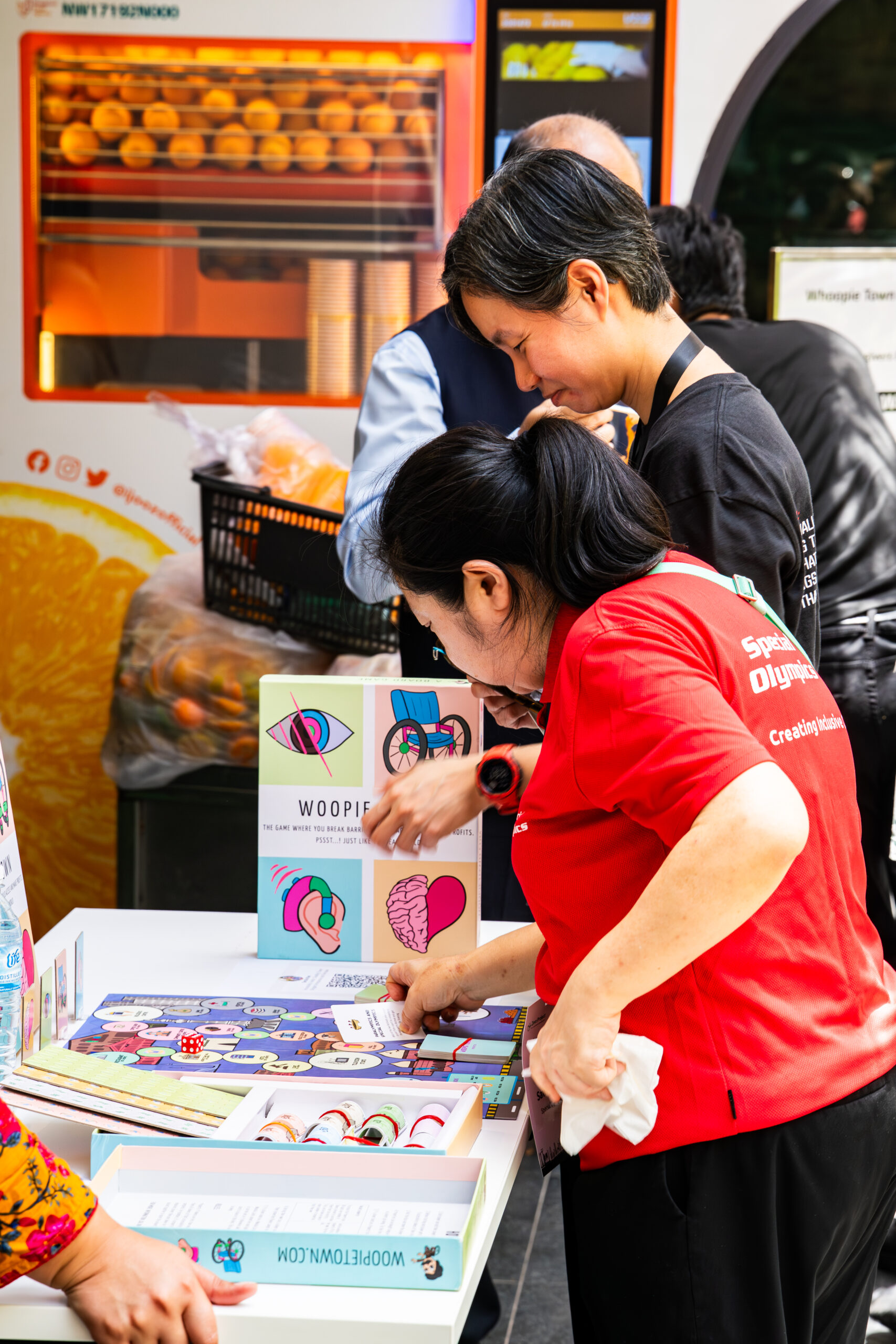
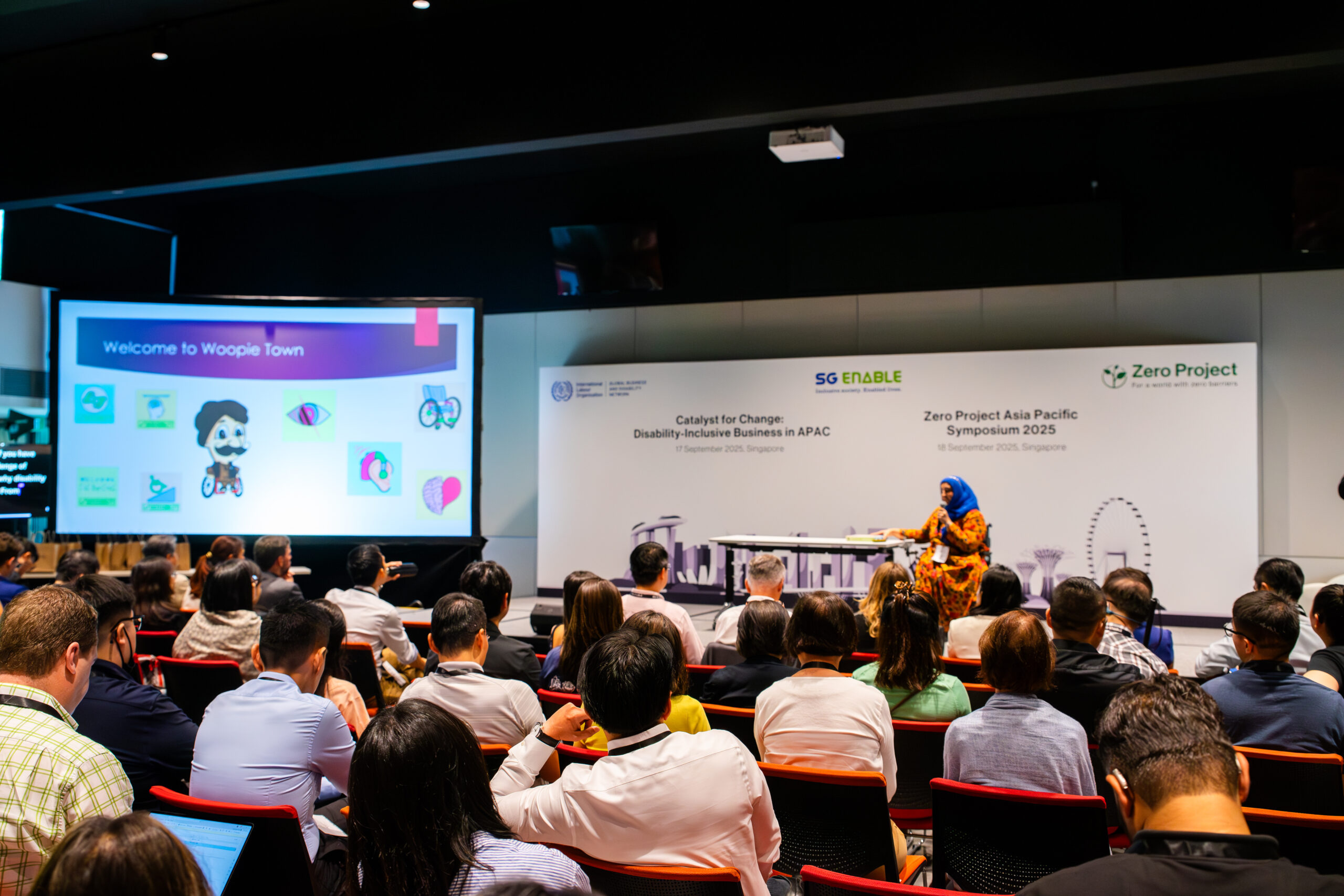
I presented Woopie Town as a solution for the first time at the Zero Project Symposium 2025 in Singapore. Zero Project is a platform that curates and celebrates solutions from across the world that focus on disability inclusion. The symposiums are global gatherings focused on innovation, inclusion, and disability rights. In rooms filled with cutting-edge technologies and ambitious policy conversations, Woopie Town stood out precisely because it wasn’t digital.
Watching people play, question, laugh, and pause, I saw something technology alone could not produce: moments of recognition. People didn’t just understand disability differently, they felt it differently. The game opened doors that no slide deck or algorithm could, reminding me that transformation often begins not with disruption, but with connection.
My vision is simple but radical: communities that learn together can change together. I believe board games are powerful tools for ending discrimination because they invite people to sit at the same table, face their assumptions, and imagine fairer worlds collectively.
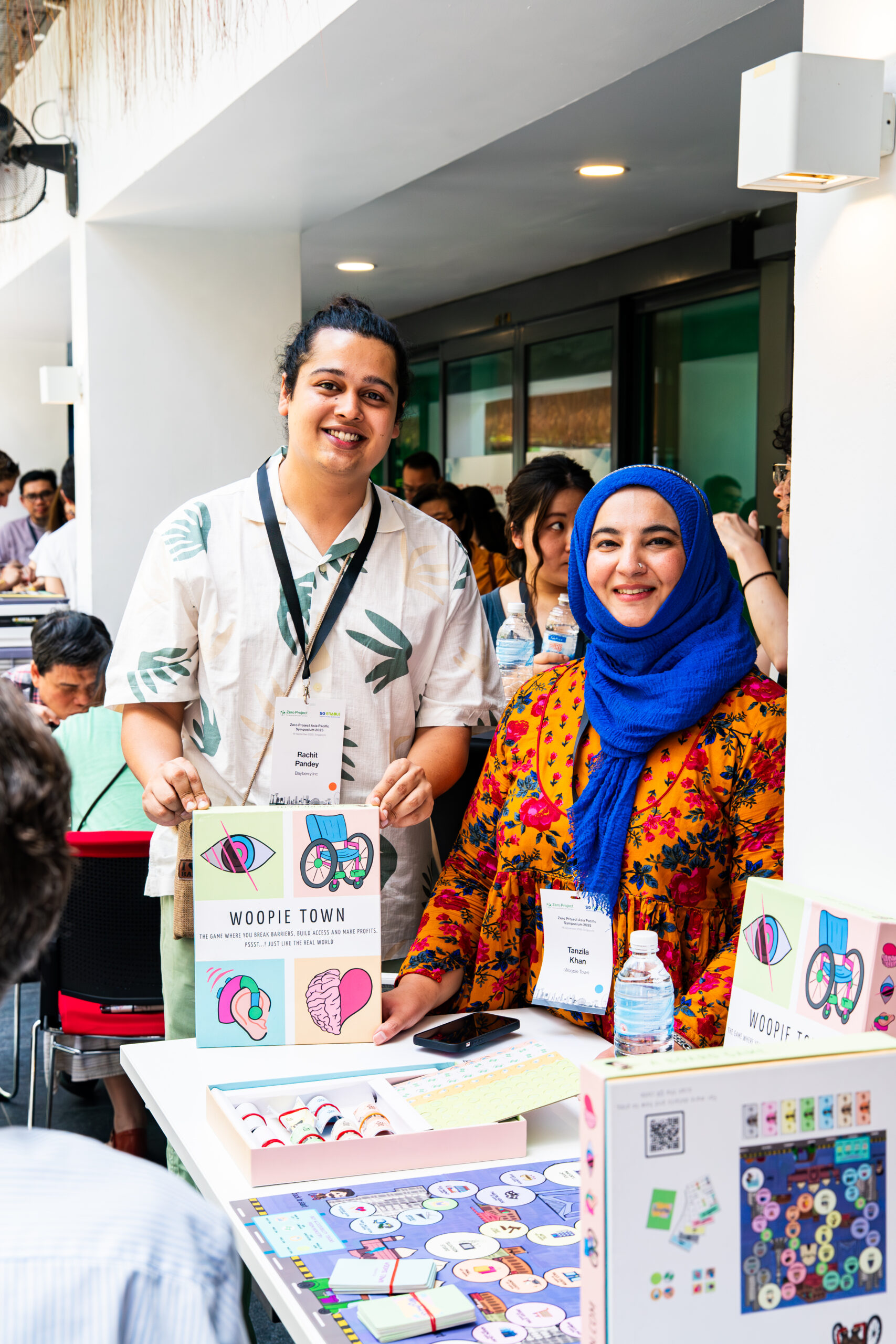
Woopie Town is not about winning; it’s about awareness, responsibility, and care. AI may help us build smarter cities, but kindness, access, and dignity are built in community. And if we want a future that truly includes disabled people, then perhaps the most powerful place to begin is not behind a screen but around a table, willing to play, listen, and change.